
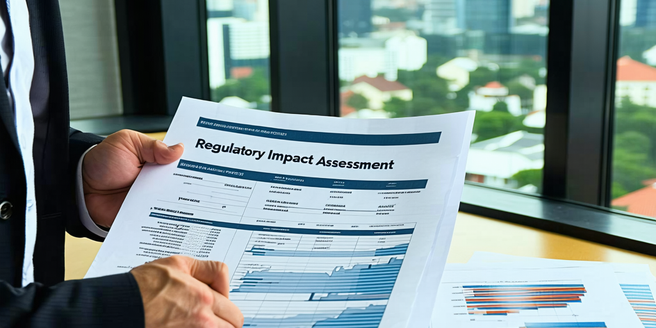
Understanding Regulatory Impact Assessments
Regulatory Impact Assessments (RIAs) are systematic approaches used by governments to evaluate the potential effects of proposed regulations, ensuring that they are efficient and effective. A typical RIA involves defining the problem, identifying objectives, and evaluating alternative solutions before deciding on the best regulatory approach. These assessments provide a framework for considering the costs and benefits of regulations, thus offering a transparent basis for policy decisions. By doing so, RIAs contribute to a more sustainable and equitable regulatory environment. RIAs help to avoid unnecessary regulations by providing evidence-based analyses that guide policymakers. They are integral to the legislative process, promoting accountability and fostering informed decision-making to balance economic, social, and environmental needs.
The Importance of RIAs in Policy Making
Regulatory Impact Assessments (RIAs) play a crucial role in the policy-making process by ensuring proposed regulations achieve their intended goals without imposing undue burdens. RIAs help policymakers critically assess the potential consequences of regulatory actions, including their socio-economic and environmental impacts. Furthermore, they provide a systematic approach to evaluating the trade-offs involved in new regulations, helping to balance competing interests. By promoting a culture of informed decision-making, RIAs enhance transparency and stakeholder engagement, enabling better policy outcomes. They support regulatory coherence by evaluating the alignment of new measures with existing policies. Ultimately, RIAs contribute to creating more efficient and effective regulations that can adapt to changing circumstances, reducing the risk of suboptimal or counterproductive rules and fostering an environment conducive to innovation and economic growth.
Key Components of a Successful RIA
A successful Regulatory Impact Assessment (RIA) comprises several key components essential for comprehensive evaluation. Initially, it must clearly delineate the issue necessitating regulatory intervention, ensuring robust problem identification. This is followed by setting clear objectives to guide the assessment process. An exploration of all feasible policy options, including non-regulatory approaches, is then conducted. It is crucial to consider the context in which the regulation will be implemented, as this can greatly affect its success and reception. Each option is evaluated for its potential impacts, benefits, and costs. Stakeholder engagement is vital, ensuring diverse perspectives are considered, enhancing the assessment’s legitimacy. A sound evidence base, comprising quantitative and qualitative data, supports rigorous analysis. Finally, transparent reporting of findings and recommendations ensures accountability, providing a solid foundation for informed decision-making.
Challenges in Conducting Effective RIAs
Conducting effective Regulatory Impact Assessments (RIAs) presents several challenges. One primary issue is obtaining accurate and comprehensive data to assess potential impacts thoroughly. Incomplete or biased data can lead to skewed analyses, undermining RIA effectiveness. Moreover, ensuring transparency in the process can increase trust and collaboration among stakeholders. Additionally, limited resources and expertise can hinder the ability to conduct detailed assessments, particularly in developing contexts. Furthermore, balancing varied stakeholder interests while maintaining objectivity can be difficult, risking policy capture. There is also the challenge of integrating RIAs into the decision-making process smoothly, ensuring they inform rather than merely accompany policy choices. Addressing these challenges is vital for RIAs to fulfill their role in delivering evidence-based, effective policy solutions.
Future Trends in Regulatory Impact Analysis
The future of Regulatory Impact Analysis (RIA) is poised for transformative developments driven by technological advancements and an increasing emphasis on sustainable governance. One emerging trend is the integration of big data and advanced analytics into the impact assessment process, enhancing the precision and scope of evaluations. Additionally, digital platforms are paving the way for greater stakeholder engagement, facilitating more inclusive and participatory policy-making. There’s a growing focus on assessing the long-term implications of regulations, particularly in relation to climate change and socio-economic inequalities. As globalization continues, there’s also a trend towards adopting international best practices in RIA, ensuring coherence in cross-border regulatory frameworks. These advancements promise to refine RIA methodologies, making them more dynamic and responsive to evolving policy challenges.